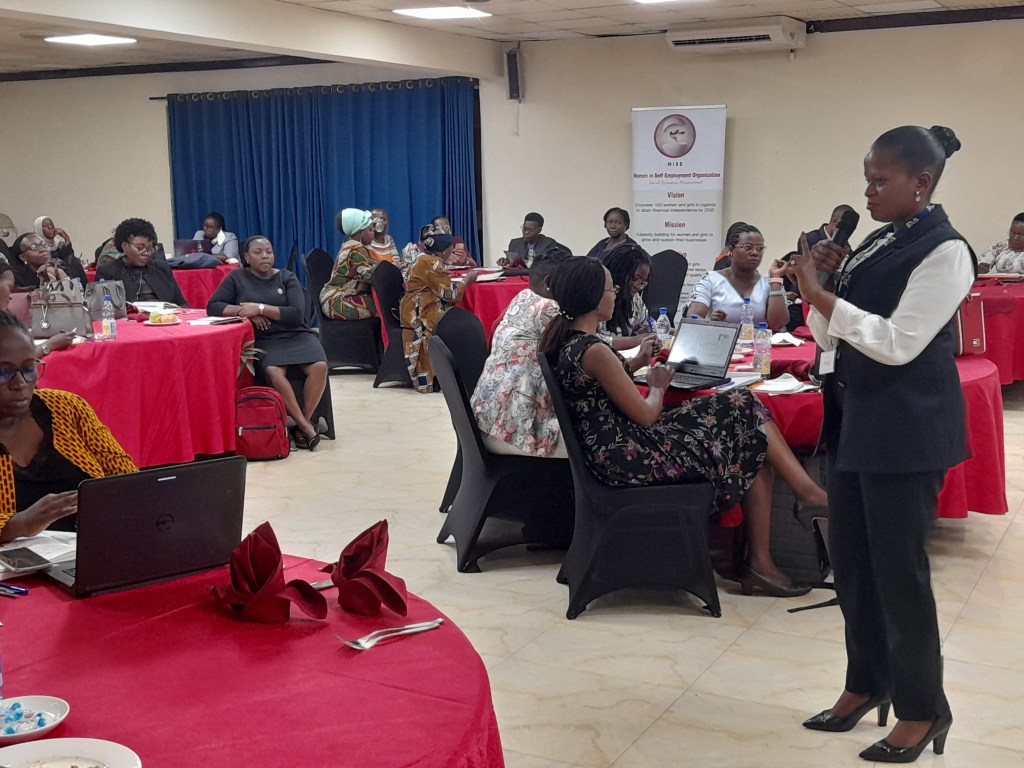
Ugandan Women Engage with Public Procurement & Disposal of Assets Authority (PPDA) staff
It is argued that Public procurement accounts for a significant share of governments’ annual expenditures and thus one of the major sources of revenue for those who get the procurement tenders.
In Uganda, women in business have demanded a fair share of Public Procurement tenders. This was fronted at a stakeholder dialogue organised by the Graca Machel Trust Networks – Uganda, held at Hotel Africana in Kampala on 18th January 2023. Connie Kekihembo, the Executive Director of Uganda Women Entrepreneurs Association Limited (UWEAL) and the lead researcher on procurement policies in Uganda quotes Harvard University, 2012, that, “While data vary, it has been estimated that public procurement constitutes 10-15% of GDP in developed countries and up to 20% in developing countries.
The Director of Capacity Building at the Public Procurement and Disposal of Assets Authority, Moses Ojambo, presided over the event, which was aimed at lobbying, and advocating for gender responsive procurement policies. “We need policies that will provide opportunities for women in MSMEs and enable them to effectively participate in government public procurement processes,” the women argued. The activity was part of a bigger Women’s Leadership for Financial Inclusion and Economic Recovery project that is being implemented by GMT networks in different countries in Africa. Uganda is one of the countries implementing the project.
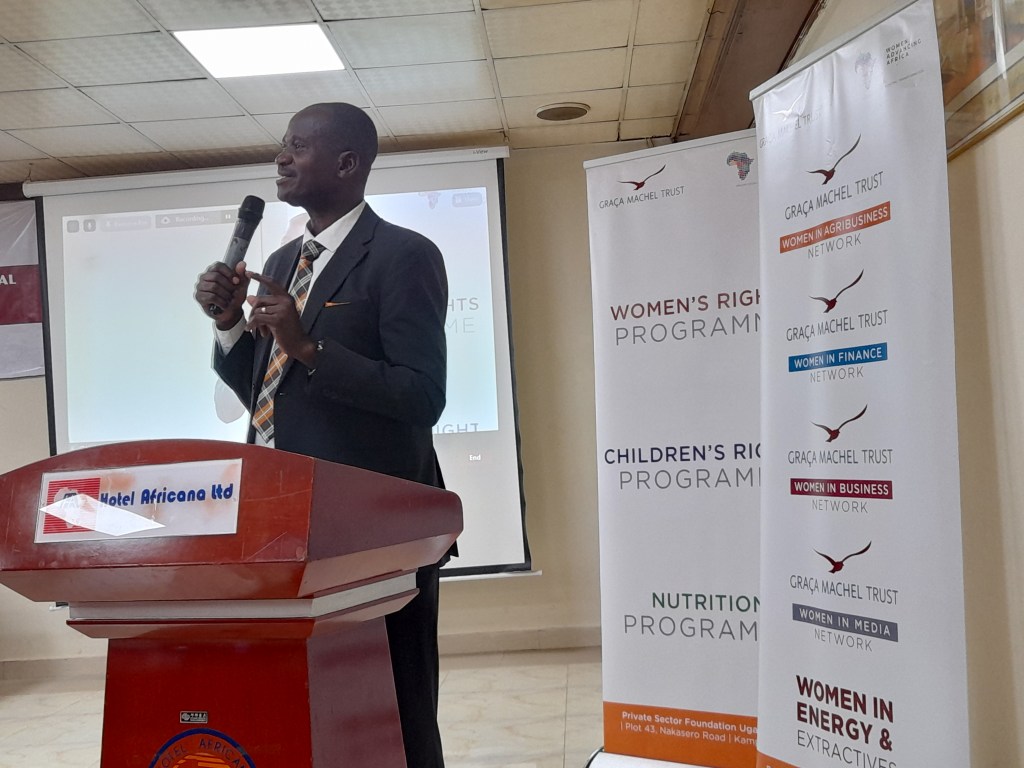
Ojambo explained that although the 2020 Amendment ACT gives marginalised groups such as women and people living with disabilities, 30 percent representation in access to procurement deals, there is need for the Ministry of Finance and Economic Development to develop and share guidelines for effective implementation. Ojambo revealed that the ministry was already in the process of developing the said guidelines and that once ready, they would contribute greatly to ensuring gender equity in the procurement industry. “Initiatives such as the Graca Machel Trust Convening which take interest in PPDA activities and which create a platform for conversation around such issues, are crucial in reminding government and holding it accountable for inclusion,” he said. Irene Nafunjo, Senior Compliance Officer at Equal Opportunities Commission concurred with her and said that, “We have a duty and a right as citizens to get involved and advise government during law reform processes before the proposed laws get signed into law. Nafunjo was part of the panelists at the event.
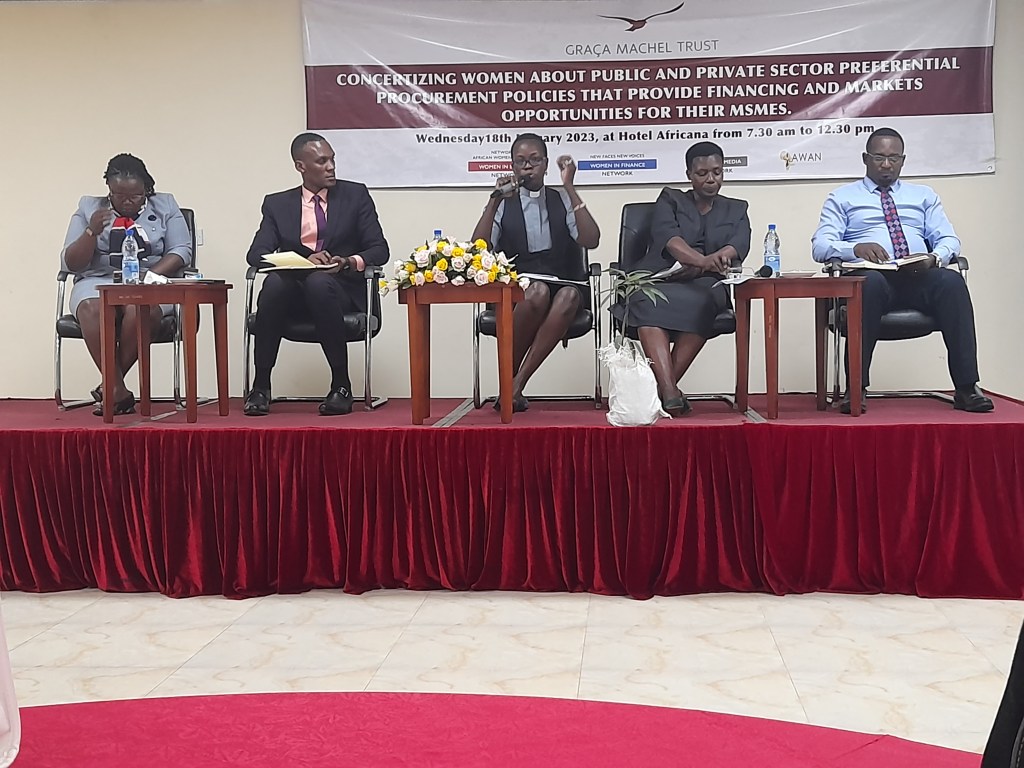
Others on the panel were Abel Mwesigye – the Executive Director of Kampala City Traders Association (KACITA), Rev. Gillian Amongin – Representing Ministry of Finance and Economic Planning, Mayie Banyenzaki – Representing Ministry of Local Government and Innocent Tushabe – representing Min. of Gender Labour and Social Development.
In her opening remarks , Shiphrah Chinsha, Shiphrah Chinsa, Director of Programmes at the Graca Machel Trust, challenged women to be more organized, form strategic partnerships, be alert and position themselves for opportunities in the business of procurement. She noted that although the barriers are numerous, women must learn to maneuver their way out. She said, “You must not just think outside the box but throw away the box and build new knowledge and new markets.” She said that despite government’s proposals, women in procurement in Africa remain at only 10%. She challenged women to start thinking different in order to meet the demands of Uganda today.
Several business sectors were represented at the event; women in coffee growing and processing, food processing, landscapers, Carpentry, accountants, public health, tours and travel, and many others. They interacted with a panel of experts drawn from different institutions; Innocent Tushabe – Min of Gender Labour and Social Development, Mayie Banyenzaki – Min of Local Government, Rev. Gillian Amongin – Min of Finance and Economic Development, Abel Mwesigye – Executive Director Kampala City Traders Association and Irene Nafungo – Compliance officer at Equal Opportunities Commission.
Beatrice Lugalambi, the General Manager, Business Development and Marketing represented Centenary Bank at the dialogue. She pledged, on behalf of the bank, to support women to engage in government programmes. “As an institution we have a lot of services to offer women; we can offer advisory services or even training in public procurement issues,” she said.
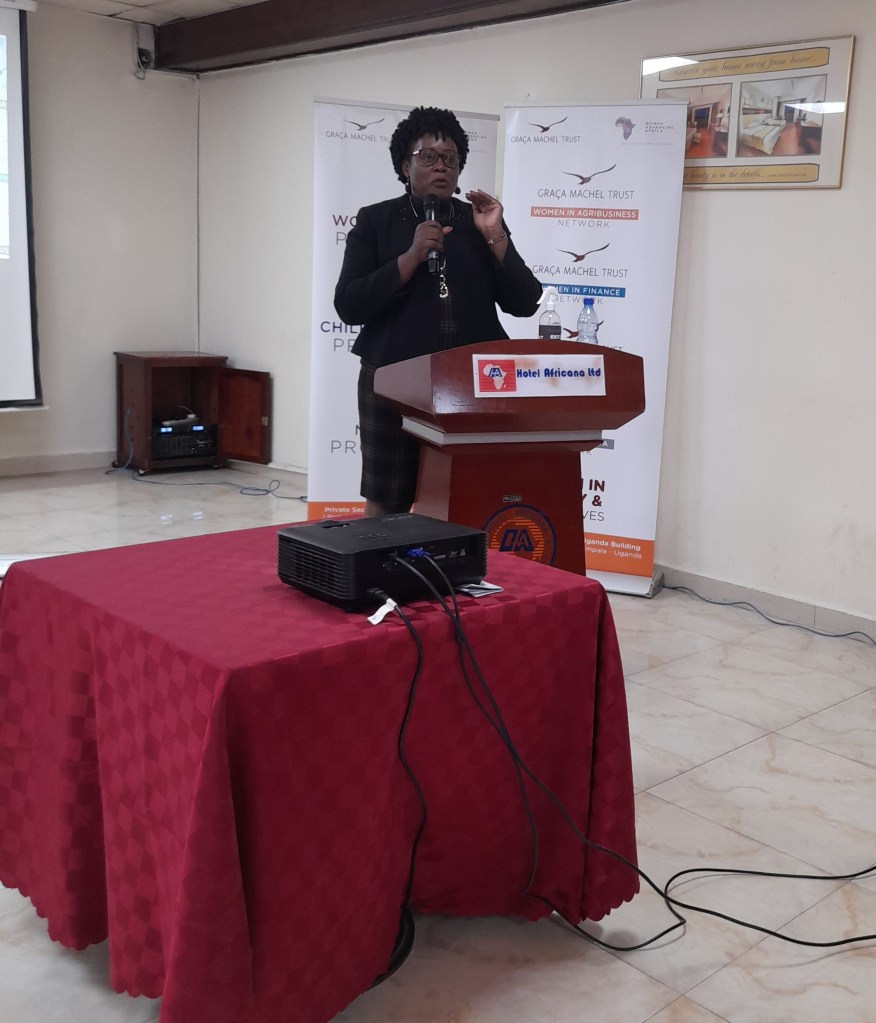
Warda Katende of New Faces New Voices revealed that, in addition to the existing challenges, there is lack of clear segregated data to enable functional monitoring and evaluation of procurement services. She advised that the new guidelines being developed by MF&EP should take into account the need for gender disaggregated data in government processes and other relevant institutions. “Government and other relevant institutions must be intentional in data collection in order to have backing for creation of relevant policies,” she said.
Florence Kasule, the Chairperson of GMT Networks – Uganda, also attended the dialogue. She questioned the 2020 PPDA ACT and said it would remain meaningless as long as women continued to be left out of the Public Procurement processes; “We want o be wealth. We do not want to remain trapped in small businesses. We want to grow. We want to be fully represented in the procurement Industry.” she said.
The event was attended by women from several business sectors. The Executive Director of Uganda Women Entrepreneurs Association Ltd (UWEAL), Ms. Constance Kekihembo, was the lead researcher in preparation for the event. She asserted that women have the capacity to absorb procurement funds and to run businesses very professionally. In her Position Paper presented at the event and titled; Unlocking the Potential of Women to Participate in Public Procurement, Ms. Kekihembo quoted Kirkton, 2013 who wrote that, each year, despite USD15 trillion passing through government hands to suppliers through the government procurement market, only 1% goes to women-based organisations. She called for bold steps to be taken to close the access to financial services gap between men and women, including bank accounts, saving, housing finance, SME loans, equity, insurance products and digital payments. Ms. Kekihembo called for a transparent procurement System that is guided by clear gender responsive policies.
As icing on an already delicious cake, Cecilia Nakitto, a member of GMT Uganda networks and a successful business woman shared her successful story of how she entered the procurement business. “It might be difficult to enter but it is very lucrative business when you get in. The major requirement is to have your house in order and to be confident,” she said.
The event was a hybrid – both physically at the Imperial Royale Hotel in Kampala, Uganda and online via Zoom.
Links for articles on the event
- https://ugandaradionetwork.net/story/women-facing-challenges-winning-govt-contracts-
- https://youtu.be/FgjC27mGIko UBC LUNCH TIME NEWS With Rhoda Ngonzi 19th January 2023.
- www.monitor.co.ug – Daily Monitor: What is holding women back from tenders? By Joan Salmon, 21/01/2023

 Twongye'wanderings