When Covid 19 hit in 2020, all nations were literary forced onto their knees due to the unprecedented challenges it came with. Within only a few weeks and months into the pandemic, all sectors of the economy struggled to operate, leading to a global economic crisis. As a result, almost all governments constituted Covid-19 response task forces to manage the crisis. In Uganda, the government constituted task forces, under disaster management framework, at national, sectoral, district and local levels. The task forces were involved in case management, surveillance, health promotion, resource mobilisation, enforcement of SOPS at all levels and now economic recovery. It has been noted that in Uganda, women were at the helm of the first National Task Force, notably; Hon Mary Karooro Okurut who was then a Minister in Charge of General Duties in the Prime Minister’s Office and Dr. Ruth Jane Aceng, the Minister of Health.
The Graca Machel Trust – Uganda Networks, spearheaded by the Network of African Business Women – Uganda Chapter (NABW-U), on 29th June 2022, held a convening of Women Representatives on Covid-19 response and Economic Recovery task forces. The event was held at Hotel Africana in Kampala and was presided over by Dr. Pamela Mbabazi who represented Hon. Mary Karooro Okurut, the pioneer lead of the first Covid 19 National task force. Dr. Mbabazi is the Chairperson of the National Planning Authority, a key institution in shaping national development strategies.
To organise the event, NABW-U worked with other Uganda chapters; New Faces New Voices (NFNV), Africa Women Agribusiness Network (AWAN), and Women in Media Network (WIMN), who are the implementing partners for the GMT Women’s Leadership for Financial Inclusion and Economic Recovery (WLFI) Project that is supported by Bill & Melinda Gates Foundation (BMGF).
In her speech, the guest of Honour underscored the key role the women of Uganda have played in the management of Covid 19 health Crisis. She thanked the government of Uganda for trusting women to deliver on task forces.
It is worth noting however, that although women have been a major workforce in COVID-19 response making up to 70% of healthcare frontline workers, they have been extremely underrepresented in government task forces. For instance, a review of 225 COVID-19 task forces from 137 countries by UN Women established that women representation was only at 24%. According to Ms. Florence Kasule, the Chairperson of NABW, “this underrepresentation negatively affects women’s recovery from the adverse impact of COVID-19 because without women in decision-making positions, there is a high risk of ignoring women’s needs in the Covid-19 response and recovery measures taken by governments.” The 1995 Constitution of the Republic of Uganda, article 10, guarantees gender equality. Article 180 of the constitution stipulates that one third of the membership of local government shall be women. Considering that task forces are part of local government establishment, it is important that the question of gender balance is articulated at formation of these TFs. To this, Ms. Kasule stated the demand for 40% women representation at all task forces at all levels.
According to the project lead researcher in the qualitative study, Ms. Kirabo Subi, there is inadequate data concerning women’s representation on Covid 19 task forces. Ms. Suubi further explained that in her findings, “women were more hit by the pandemic because most of the sectors where women operate were closed while those dominated by men such as bodaboda, construction, etc. remained open. It was majorly market women who stayed at work to provide food to the community at the risk of their lives and their families.” Women’s situation was worsened by the immobility challenges. When for instance men rode bicycles to move around and forge a way forward, women stayed home. In Uganda, it is only a handful of women who own or can even ride a bicycle.
Another highlight of the event was the keynote address by the President of the Uganda Law Society, Ms. Pheona Wall, in which she challenged women to support one another to excellence. “Be the woman that breaks the glass ceiling for other women to excel,” she said. She brought a silent chill into the room when she said that most women are just one sickness away from poverty and bankruptcy. She encouraged women to invest more, have lawyers and even consider insurance. “These contracts you sign are prepared by lawyers. You need lawyers to interpret them for you before you sign them.” All the women in the room looked at one another as they digested the reality of their economic situations.
The keynote was followed by a very animated panel discussion where many issues were brought up both from the panel and the audience. Panelists included: Ms. Amina Lukanga (Kampala Resident City Commissioner – RCC), Mr. Allan Ssenyondwa (Private Sector Foundation), Ms. Violet Kabasindi (Informal Sector workers representative in Kampala, Wakiso and Busia,) Juliet Bagaaya (Centenary Bank) and Hope Katwiire (Kampala City Traders Association – KACITA – Women’s League).
Ms. Hope Katwiine proposed that Recovery Task forces’ composition should have women from the women’s groups and not just those in political appointments. The Kampala Resident City Commissioner (RCC) Ms. Amina Lukanga said that sometimes she has had to step away from Government side to the women petty traders’ side because she understands the economic challenges they are faced with. “When we raid streets and take a basket of mangoes, sometimes that is all that the woman possesses. It is her capital. It is her income. It is her everything,” she said. She pledged to support the 40% women representation proposal to ensure meaningful economic recovery. Mr. Michael Kitamirike from Ndejje University emphasised the need for government to explain to Ugandans what they are doing to address the post Covid era. Ms. Beatrice Bbale Nakayiki from President’s Office said, “Economic recovery programmes will remain jargon unless the country shifts the discussion to production and productivity.” But maybe there is need for government to also shift from handouts in form of development models. Looking for instance at the 100 million shillings in the parish development model, it is important that proper monitoring is done and real impact is studied and documented so that it does not become like the past models which have failed miserably keeping many Ugandans in poverty yet money is spent.
The networks plan to hold training activities where women representatives on task forces will be trained in lobbying and advocacy skills and other skills that will make them more effective and accountable to the nation and to the women who they represent.
The event was graced by the Graca Machel Trust Director of Programmes, Ms. Shiphra Chisha. In her remarks, she emphasised the commitment of GMT in improving lives of African women and children through their 3 main programme areas; Women’s Economic and Social Advancement, Children’s Rights and Education.
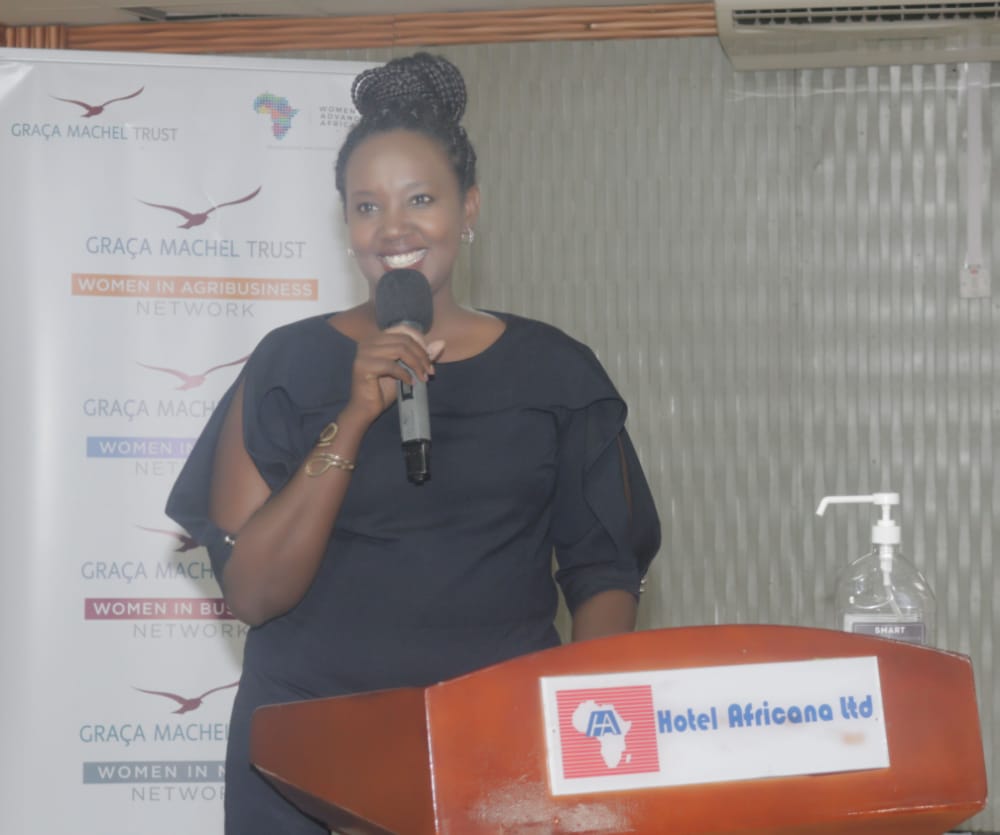
Photo credits; Native TV International
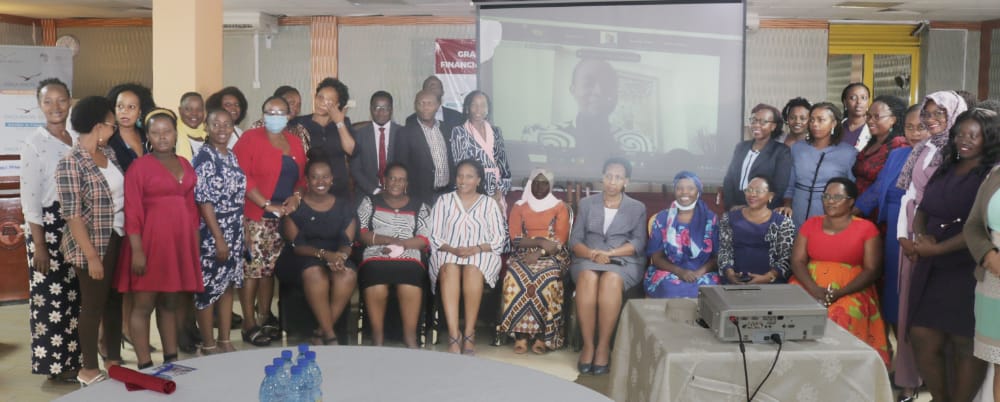
Photo Credits; Native TV International
The Author, Hilda J. Twongyeirwe is a Member of FEMRITE – Uganda, The Lions Club of Kampala Central, Action for Development, The GMT Women in Media Network and The Pan African Writers Association.

 Twongye'wanderings