GMT Networks in Uganda: Keeping on the Move

A lot is cooking for GMT Networks – Uganda. August has been a busy month as the team planned for the coming High Level Roundtable Convening to be held on 8th September at the Imperial Royale Hotel in Kampala. The Roundtable is part of the Graca Machel Trust Women’s Leadership for Financial inclusion and Economic Recovery Initiative (WLFI), which is being implemented by different GMT affiliates across the continent.
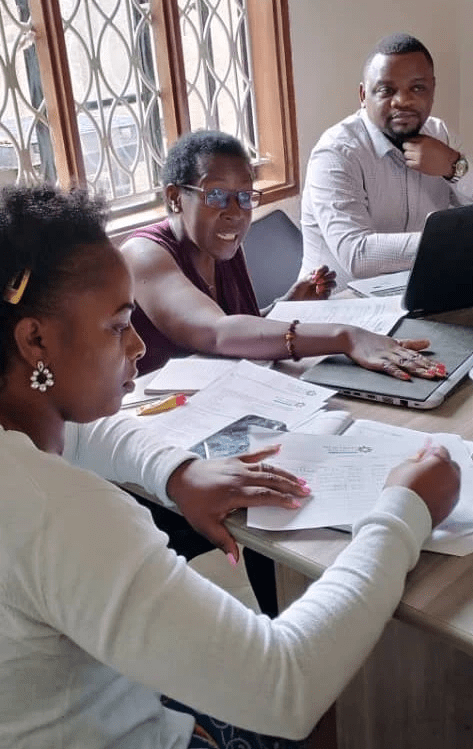
Roundtable Preparation meeting for the WILF Project in Progress

The Roundtable is aimed at seeking commitments and political will of relevant policy maker and leaders, to the recently launched Gender mainstreaming standards for Gender inclusive Covid-19 Economic recovery interventions. The launch, which was followed by a convening of the  National and Regional  female representatives on the task force for covid 19 held at Hotel Africana in July set the pace for the three-year project. Participation in the Roundtable discussions is open as it is a hybrid of online and physical. It is going to be an interesting conversation for all those interested in understanding politics of inclusion and exclusion as shaped by policies and and policymakers. Many times there is lack of spaces for the public to join conversations towards policy change or shaping new policies. This is an opportunity to Join the the conversation and be part of teams seeking to influencing Covid-19 economic recovery strategies in Uganda, starting at 07:00 AM. Zoom link is; https://us02web.zoom.us/j/86346915876?pwd=aXRNZURtcVhNYmxCR2RoUlg2UzRoQT09, Meeting ID: 863 4691 5876, Passcode: 848637.
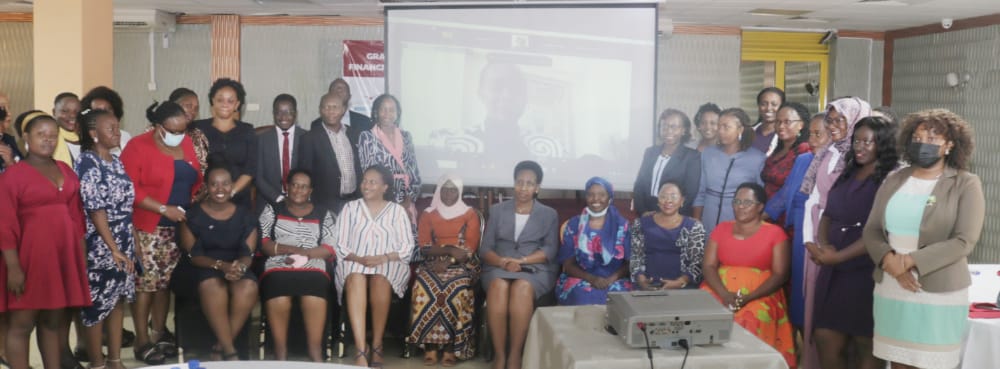
Convening at Hotel Africana

Network members have been busy following up on the different outcomes of the WLFI activities while at the same time driving other crucial activities in individual networks relevant to GMT strategies. The National Association of Business Women (NABW), was the lead convener of the 3rd COMESA Federation of Women in Business, held at the Uganda Museum and Sheraton Hotel in Kampala. Through the generous support of Graca Machel Trust in South Africa, all GMT Networks in Uganda were represented at the event. In her speech, NABW Chairperson Florence Kasule recognised the important role played by GMT to drive business opportunities for women in Africa. The Minister of State for Trade, Industry and Cooperative Hon. Ntabazi Harriet notably promised to help women advance their agendas to bring them the money needed to improve their businesses when they submit their proposals and budgets.
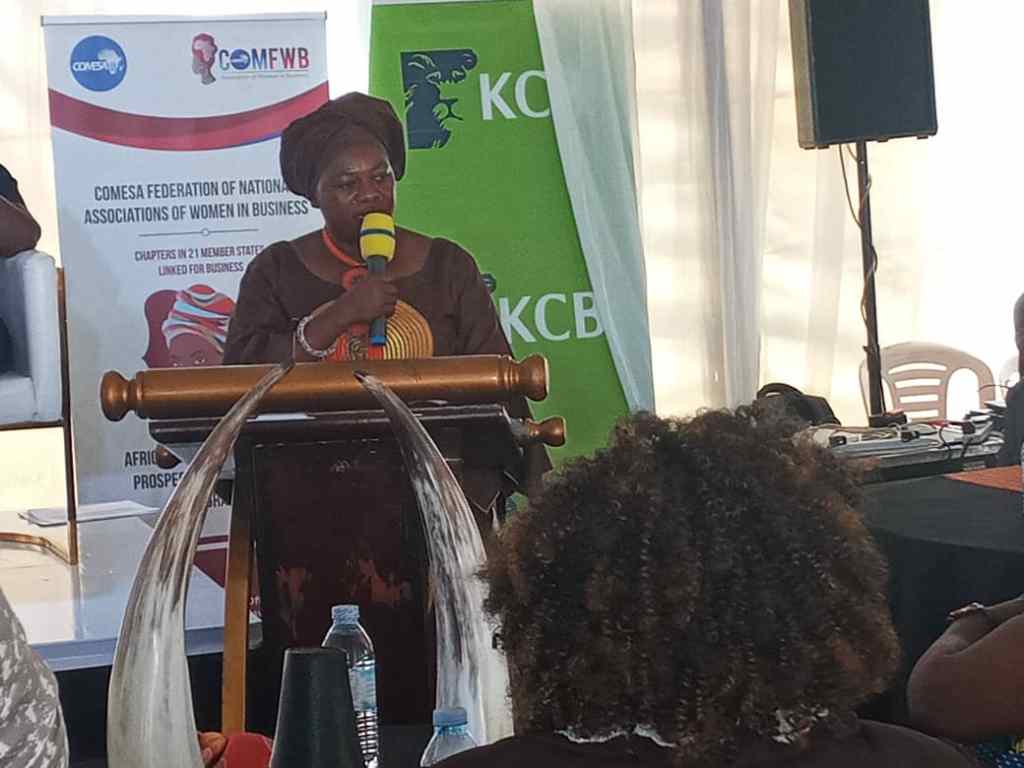
The Minister of State for Trade, Industry and Cooperative Hon. Ntabazi Harriet at the opening event

The theme for 2022 was; ‘Business Women Advancing Regional Trade.’ The emphasis was on the need for the recognition of the contribution of business women to economic development in the region. The team pledged to continue to be in line with Agenda 2063 goal of transformed economies with a focus on economic diversification and resilience.

In other developments, Theopista Sekitto represented GMT networks at the South Africa ‘s Women’s Day Celebration 2022 at Serena Hotel in Kampala. The South African Ambassador to Uganda recognised GMT Uganda networks for the post-covid economic recovery and financial inclusion initiatives targeting women.  
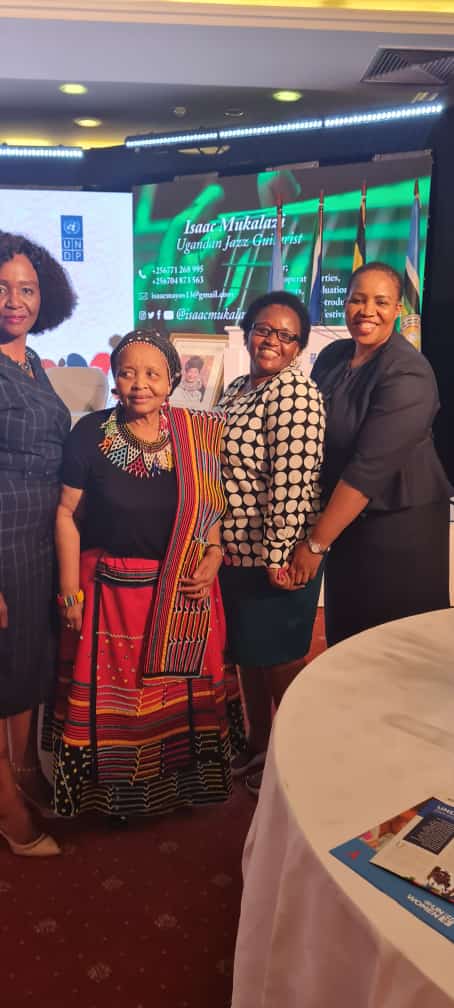
Theopista Ntare Sekitto with South Africa’s Ambassador to Uganda

To celebrate the season AWAN, led by Joyce Atuhaire, held the candle high when their team won a grant to enable them trade opportunities in dried fruit in the UK.
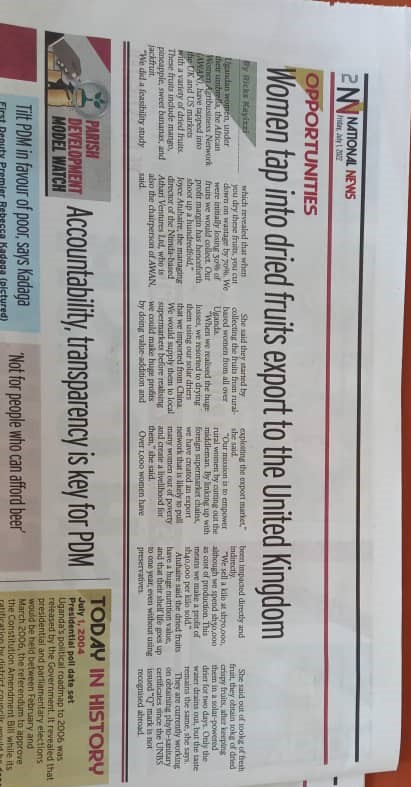
AWAN in the News

GMT – Uganda Networks convenes a National dialogue on Female representation on Covid 19 response and Economic Recovery task forces in Uganda

When Covid 19 hit in 2020, all nations were literary forced onto their knees due to the unprecedented challenges it came with. Within only a few weeks and months into the pandemic, all sectors of the economy struggled to operate, leading to a global economic crisis. As a result, almost all governments constituted Covid-19 response task forces to manage the crisis. In Uganda, the government constituted task forces, under disaster management framework, at national, sectoral, district and local levels. The task forces were involved in case management, surveillance, health promotion, resource mobilisation, enforcement of SOPS at all levels and now economic recovery. It has been noted that in Uganda, women were at the helm of the first National Task Force,    notably; Hon Mary Karooro Okurut who was then a Minister in Charge of General Duties in the Prime Minister’s Office and Dr. Ruth Jane Aceng, the Minister of Health.

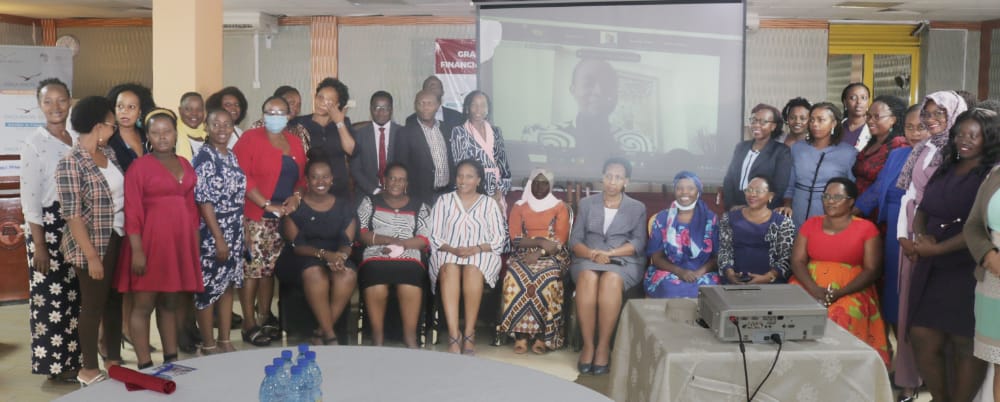
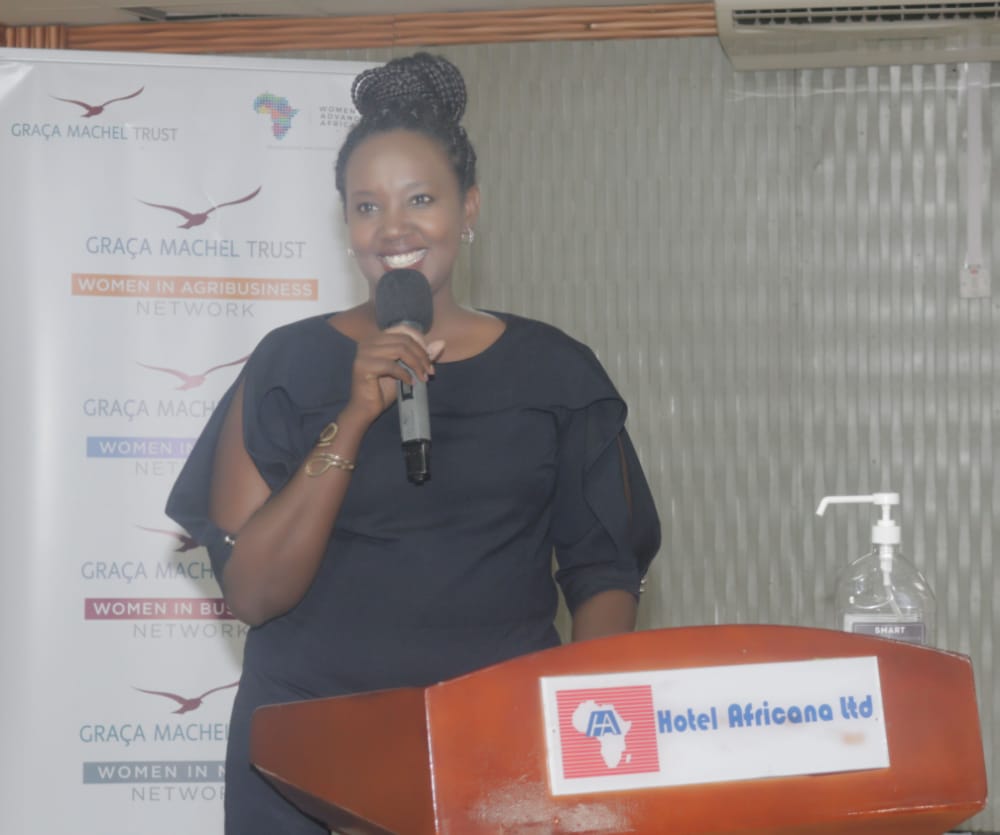
The Graca Machel Trust – Uganda Networks, spearheaded by the Network of African Business Women – Uganda Chapter (NABW-U), on 29th June 2022, held a convening of Women Representatives on Covid-19 response and Economic Recovery task forces. The event was held at Hotel Africana in Kampala and was presided over by Dr. Pamela Mbabazi who represented Hon. Mary Karooro Okurut, the pioneer lead of the first Covid 19 National task force. Dr. Mbabazi is the Chairperson of the National Planning Authority, a key institution in shaping national development strategies.

To organise the event, NABW-U worked with other Uganda chapters; New Faces New Voices (NFNV), Africa Women Agribusiness Network (AWAN), and Women in Media Network (WIMN), who are the implementing partners for the GMT Women’s Leadership for Financial Inclusion and Economic Recovery (WLFI) Project that is supported by Bill & Melinda Gates Foundation (BMGF).

In her speech, the guest of Honour underscored the key role the women of Uganda have played in the management of Covid 19 health Crisis. She thanked the government of Uganda for trusting women to deliver on task forces.

It is worth noting however, that although women have been a major workforce in COVID-19 response making up to 70% of healthcare frontline workers, they have been extremely underrepresented in government task forces. For instance, a review of 225 COVID-19 task forces from 137 countries by UN Women established that women representation was only at 24%. According to Ms. Florence Kasule, the Chairperson of NABW, “this underrepresentation negatively affects women’s recovery from the adverse impact of COVID-19 because without women in decision-making positions, there is a high risk of ignoring women’s needs in the Covid-19 response and recovery measures taken by governments.” The 1995 Constitution of the Republic of Uganda, article 10, guarantees gender equality. Article 180 of the constitution stipulates that one third of the membership of local government shall be women. Considering that task forces are part of local government establishment, it is important that the question of gender balance is articulated at formation of these TFs. To this, Ms. Kasule stated the demand for 40% women representation at all task forces at all levels.

According to the project lead researcher in the qualitative study, Ms. Kirabo Subi, there is inadequate data concerning women’s representation on Covid 19 task forces. Ms. Suubi further explained that in her findings, “women were more hit by the pandemic because most of the sectors where women operate were closed while those dominated by men such as bodaboda, construction, etc. remained open. It was majorly market women who stayed at work to provide food to the community at the risk of their lives and their families.” Women’s situation was worsened by the immobility challenges. When for instance men rode bicycles to move around and forge a way forward, women stayed home. In Uganda, it is only a handful of women who own or can even ride a bicycle.

Another highlight of the event was the keynote address by the President of the Uganda Law Society, Ms. Pheona Wall, in which she challenged women to support one another to excellence. “Be the woman that breaks the glass ceiling for other women to excel,” she said. She brought a silent chill into the room when she said that most women are just one sickness away from poverty and bankruptcy. She encouraged women to invest more, have lawyers and even consider insurance. “These contracts you sign are prepared by lawyers. You need lawyers to interpret them for you before you sign them.” All the women in the room looked at one another as they digested the reality of their economic situations.

The keynote was followed by a very animated panel discussion where many issues were brought up both from the panel and the audience. Panelists included: Ms. Amina Lukanga (Kampala Resident City Commissioner – RCC), Mr. Allan Ssenyondwa (Private Sector Foundation), Ms. Violet Kabasindi (Informal Sector workers representative in Kampala, Wakiso and Busia,) Juliet Bagaaya (Centenary Bank) and Hope Katwiire (Kampala City Traders Association – KACITA – Women’s League).

Ms. Hope Katwiine proposed that Recovery Task forces’ composition should have women from the women’s groups and not just those in political appointments. The Kampala Resident City Commissioner (RCC) Ms. Amina Lukanga said that sometimes she has had to step away from Government side to the women petty traders’ side because she understands the economic challenges they are faced with. “When we raid streets and take a basket of mangoes, sometimes that is all that the woman possesses. It is her capital. It is her income. It is her everything,” she said. She pledged to support the 40% women representation proposal to ensure meaningful economic recovery. Mr. Michael Kitamirike from Ndejje University emphasised the need for government to explain to Ugandans what they are doing to address the post Covid era. Ms. Beatrice Bbale Nakayiki from President’s Office said, “Economic recovery programmes will remain jargon unless the country shifts the discussion to production and productivity.” But maybe there is need for government to also shift from handouts in form of development models. Looking for instance at the 100 million shillings in the parish development model, it is important that proper monitoring is done and real impact is studied and documented so that it does not become like the past models which have failed miserably keeping many Ugandans in poverty yet money is spent.

The networks plan to hold training activities where women representatives on task forces will be trained in lobbying and advocacy skills and other skills that will make them more effective and accountable to the nation and to the women who they represent.

The event was graced by the Graca Machel Trust Director of Programmes, Ms. Shiphra Chisha. In her remarks, she emphasised the commitment of GMT in improving lives of African women and children through their 3 main programme areas; Women’s Economic and Social Advancement, Children’s Rights and Education.

Phiona Wall giving the Keynote address.
Photo credits; Native TV International
Some of the participants at the convening.
Photo Credits; Native TV International

The Author, Hilda J. Twongyeirwe is a Member of FEMRITE – Uganda, The Lions Club of Kampala Central, Action for Development, The GMT Women in Media Network and The Pan African Writers Association.

PAWA Conference 2022 echoes Makerere Conference 1962

The Pan African Writers Association (PAWA), under the new leadership of Dr. Wale Okediran from Nigeria has just held a writers’ conference to echo the June 1962 Makerere Conference of African Writers of English Expression. The Conference which was held in Nigeria at the renowned University of Ibadan was attended by writers from over 40 countries. In his opening remarks, the Vice Chancellor of Ibadan University – the host – Prof Kayode Adebowale underscored the importance of the Academia in building democratic states and decolonising the African continent. Indeed, during those days, universities played a critical role in strengthening
political and social consciousness of the African people.

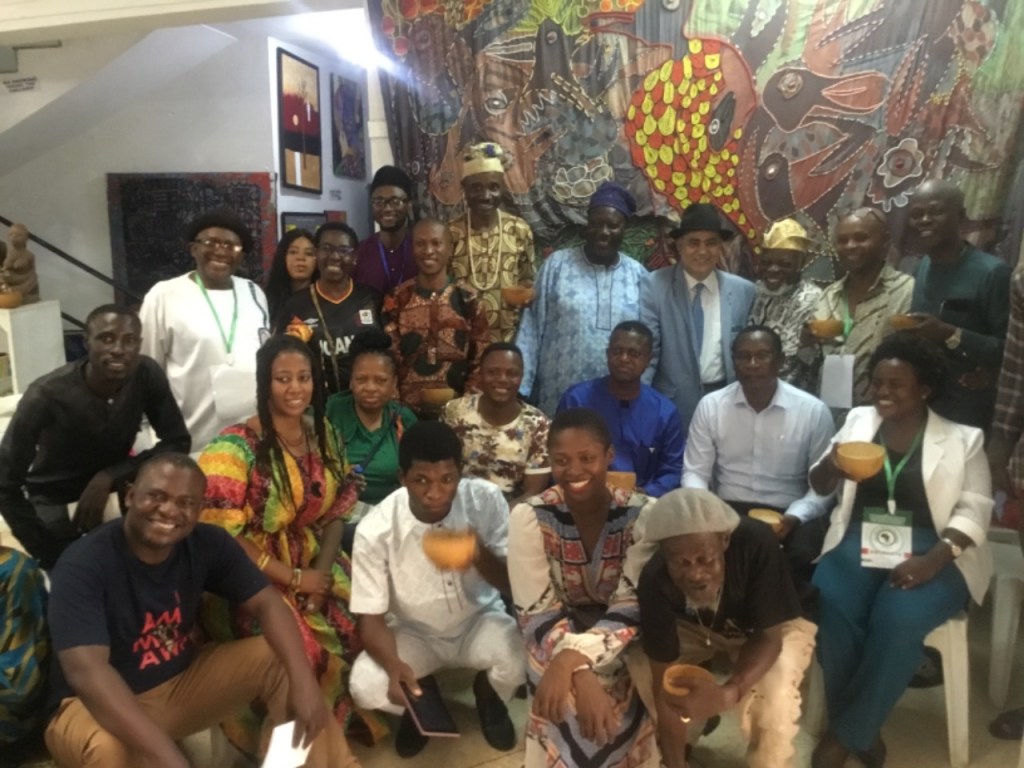
Some of the Participants at the conference included: Ade Wede Wee-wee Kekuleh from Liberia, Koumealo Anate – Togo, Richard Ali – Congo – Kinshasha, Monique Cheru – Zimbabwe, John Rusimbi – Rwanda, Kabaji Egala – Kenya, Moses Kainwo – Sierra Leone, Cherno Omar Barry – Gambia, Lucille Mudenda – Zambia, Fatima Mashoud – Niger, Carlos Paradona – Mozambique, Oyono Imela & Facely II Mara – Equatorial Guinea, Camillus Chuma – Nigeria, Angula Ndjembo – Namibia, Chikumbutso Ndaferankhande – Malawi, Ashraf Aboul & Baseim Abdelazeim – Egypt, and Fatih Hamadto – Sudan, Bios Diallo – Mauritania, Macaire Etty – Cote D’ivore, Aden Hassan – Djibouti, Cathbert Zuberi – Tanzania, Paschal Bekolo – Cameroun, Joseph Butoyi – Burundi, Sylvanus Bedzrah – Ghana, Eric Joel Bekale from Gabon and Hilda J. Twongyeirwe – Uganda. Other countries represented included Ethiopia, Morocco, Tunisia, Chad, Botswana, Benin, Ivory Coast, Djibouti, Burkina Faso, Angola and Algeria. The conference was also attended by academicians such as Prof. Akachi Ezeigbo, Dr. Vicky Silvester, and many others especially from Nigeria and Ghana.

The 1962 conference was the first African Writers Conference of its kind and it has remained a landmark and reference point in the history of writing and literature in Africa. The conference was sponsored by the Congress for Cultural Freedom and the Mbari Club in association with the Department of Extra-Mural Studies of Makerere, whose director at the time was Gerald Moore. The conference was attended by writers who today form Africa’s top writers’ list; Nobel Laureate in Literature Wole Soyinka, Ngũgĩ wa Thiong’o, Okot p’Bitek, Pio Zirimu, Robert Serumaga, David Rubadiri, Jonathan Kariara, John Pepper Clark, Obi Wali, Gabriel Okara, Christopher Okigbo, Bernard Fonlon, Frances Ademola, Cameron Duodu, Kofi Awoonor, Ezekiel Mphahlele, Bloke Modisane, Lewis Nkosi, Dennis Brutus, Arthur Maimane, Rajat Neogy, Grace Ogot, Rebecca Njau, and Langston Hughes. 

The major challenge that was debated at Makerere was the African writer and the dilemma of language. Sixty years later, the main concern of the Ibadan writers’ conference was: The Pan African Writers’ Agenda for peace, security and cultural development. This comes in the wake of political unrest and civil wars in many parts of Africa. The Guest of Honour, Prof. Yemi Osinbajo, The Vice President of the Federal Republic of Nigeria, in his Keynote speech urged writers to use their pens to weave narratives that will help to build critical thinking skills especially among young people so that they are not taken advantage of by war and insurgency-mongers. The speech was read by Hon. Seye Oyeleye, Director General – Development Agenda for Nigeria. In a related speech, Mr. John Rusimbi the President of PAWA urged writers to use their writing as a tool to strengthening the African culture, building bridges across cultures and forging gender
equality.

In his remarks, Dr. Wale Okediran, the General Secretary of PAWA, thanked the Ford Foundation Nigeria, The University of Ibadan, the Nigerian Academy Of Letters (NAL) and the Association Of Nigerian Authors(ANA), for funding and supporting the conference which run from 24the to 25th June 2022.

Other Activities held included a Book Exhibition, an evening of readings and performances at the Wole Soyinka Theatre and an Awards Dinner Night where over 15 Writers and 12 Patrons of the Arts received recognition awards for their contribution to the growth of literature in Africa. 2 of the 27 awardees were women. From the exhibition and the awards night, it is clear that that African women remain in a disadvantaged position compared to their male counterparts. This means therefore that there is need for more deliberate effort and actions to bring them to a more competitive position.

Mr. John Rusimbi from Rwanda was elected President of PAWA Council at the General Assembly, the first, in 30 years of the association’s establishment. The assembly was held during the conference. Others on the Council are: Prof Koumealo Anate, Dr. Wale Okediran, Prof Kabaji Egara, Ms. Oyono Imela, Ms Monique Cheru & Mr. Fatih Hamadto. A Constitution Review Commission was also constituted to review the constitution which has not been reviewed since establishment 30 years ago. The team comprises; Dr. Cherno Omar Barry from Gambia, Hilda Twongyeirwe from Uganda, Mr. Eric Joel Bekale and Carlos Paradona from Mozambique.

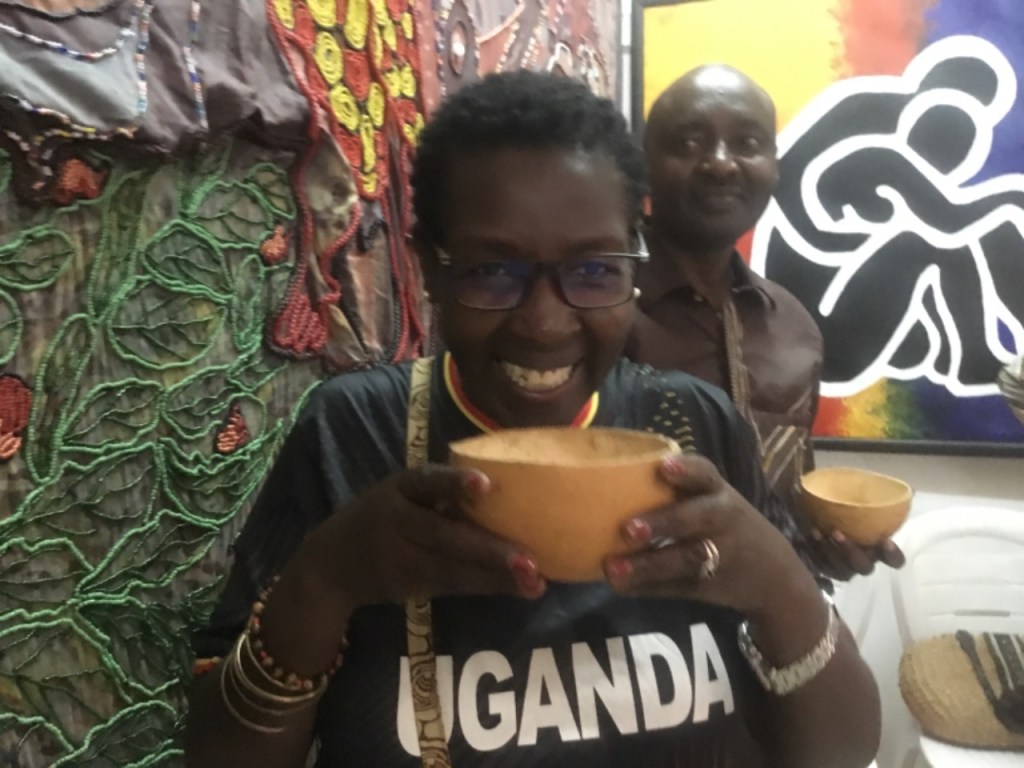
And finally, I got to taste Palm Wine, the most talked about drink in Nigerian literature. It is important that governments tap into the potential of arts and culture to uplift cultural tourism and diplomacy.

Photo credit: Ashraf Aboud – Egypt
Photo Credit: Ashraf Aboud – Egypt